JIDU 01
A Next-Generation HMI Visual Language for the Robocar 为汽车机器人而生的下一代HMI视觉语言
For JIDU Auto's first vehicle HMI, we treated autonomous driving as an evolving experience state rather than a single feature. As the vehicle gained greater capabilities in sensing, interpreting, and assisting, the interface needed to communicate system intent, organize dynamic information, and build trust between the driver and the intelligent cabin. 在极度汽车首款车型的 HMI 设计中,我们将自动驾驶视为一种持续演进的体验状态,而非单一功能。随着车辆在感知、理解与辅助能力上的提升,车内界面需要清晰传达系统意图、组织动态信息,并在驾驶者与智能座舱之间建立信任。
As the lead visual designer for the HMI team, I translated JIDU's pixel-based geometry and signature purple into a systematic in-car visual experience across state expression, motion feedback, scenario-driven ambience, and visual recognition - shaping an HMI visual language for next-generation autonomous driving experiences. 作为 HMI 团队的主视觉设计师,我通过将极度的像素化几何与标志性紫色转化为系统化的车内视觉体验,贯穿状态表达、动态反馈、场景化氛围与视觉识别,塑造出一套面向下一代自动驾驶体验的 HMI 视觉语言。
- Project
- JIDU AUTO · JIYUE 01
- Year
- 2023
- Role
- HMI Lead Visual Designer HMI 视觉主导设计师
- Focus
-
HMI Visual Language
Driving State Expression
Motion System
Scenario Experience HMI视觉语言
驾驶状态表达
动画系统
场景体验
When the Car Becomes a Robocar, Intelligence Needs to Be Seen, Heard, and Understood 当汽车成为汽车机器人,智能需要被看见、被听见、被理解
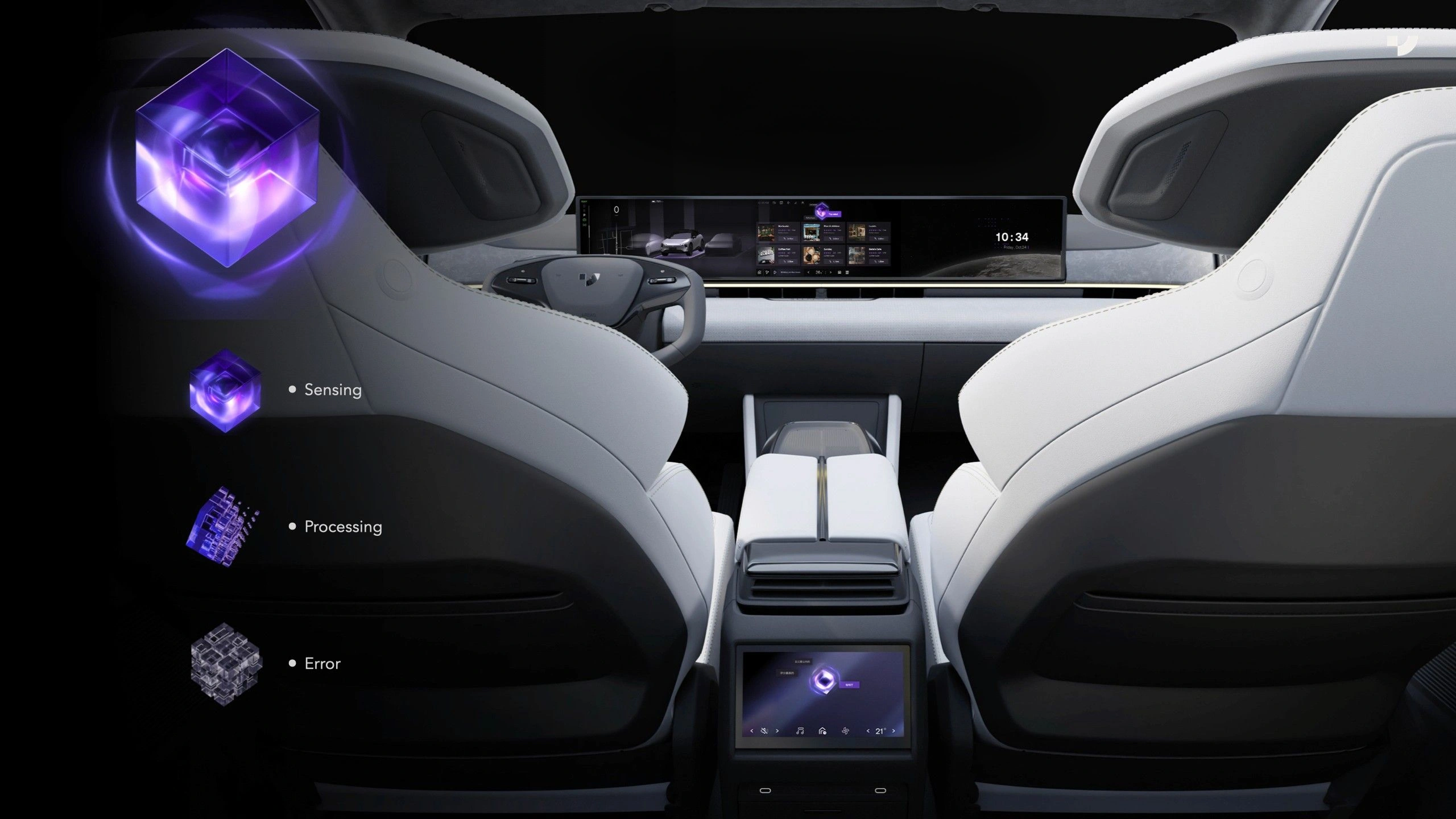
As the vehicle evolves from a machine to be operated into an intelligent robocar, intelligence can no longer remain hidden inside the system. It needs to be seen through driving visualization, heard through voice interaction, and understood through clear feedback. 当车辆从被操作的机器演进为汽车机器人,智能不能再隐藏在系统内部。它需要通过驾驶可视化被看见,通过语音交互被听见,并通过清晰反馈被理解。
Structure in Pixels, Intelligence in Purple 以像素构建秩序,以紫色表达智能
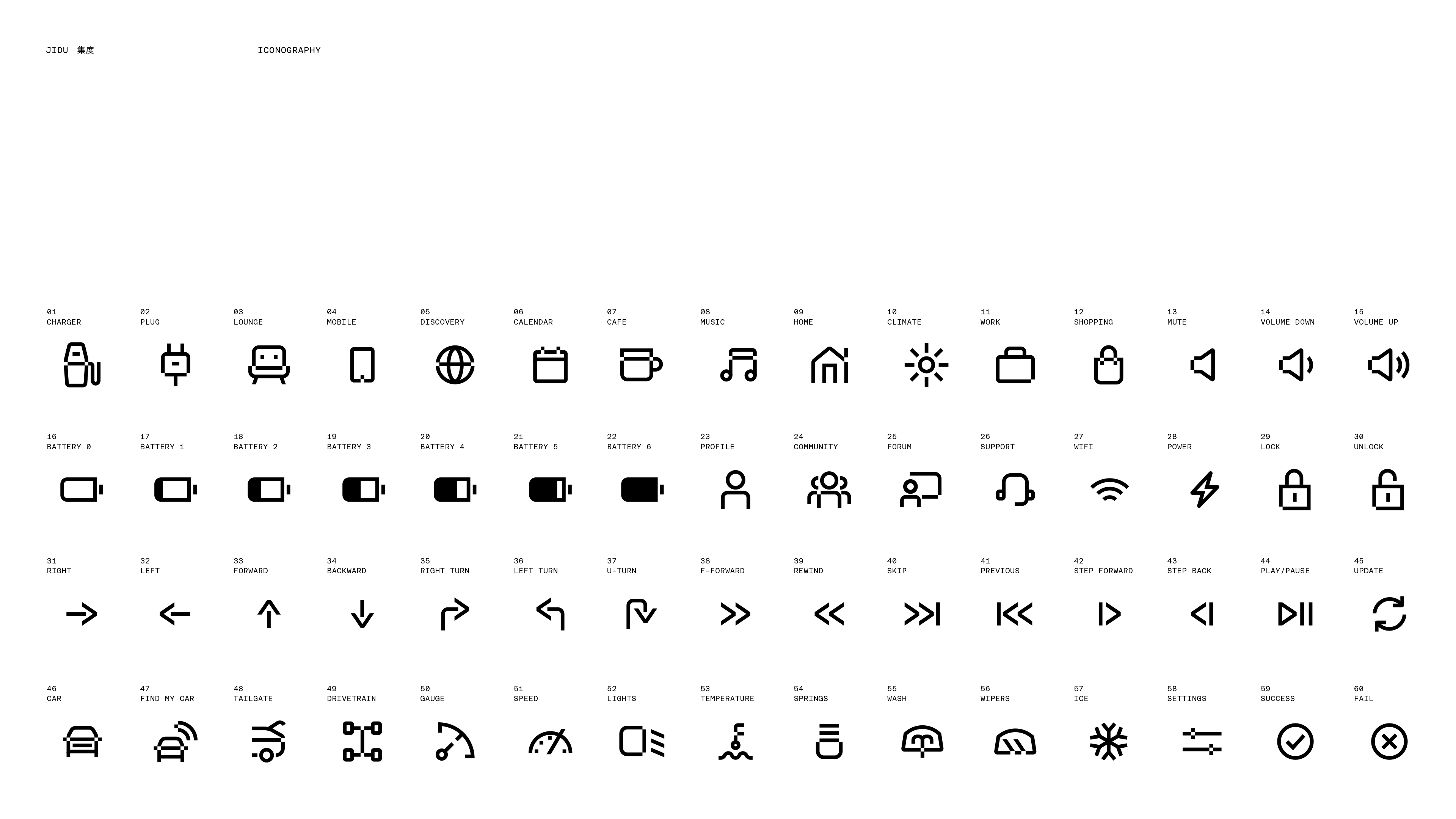
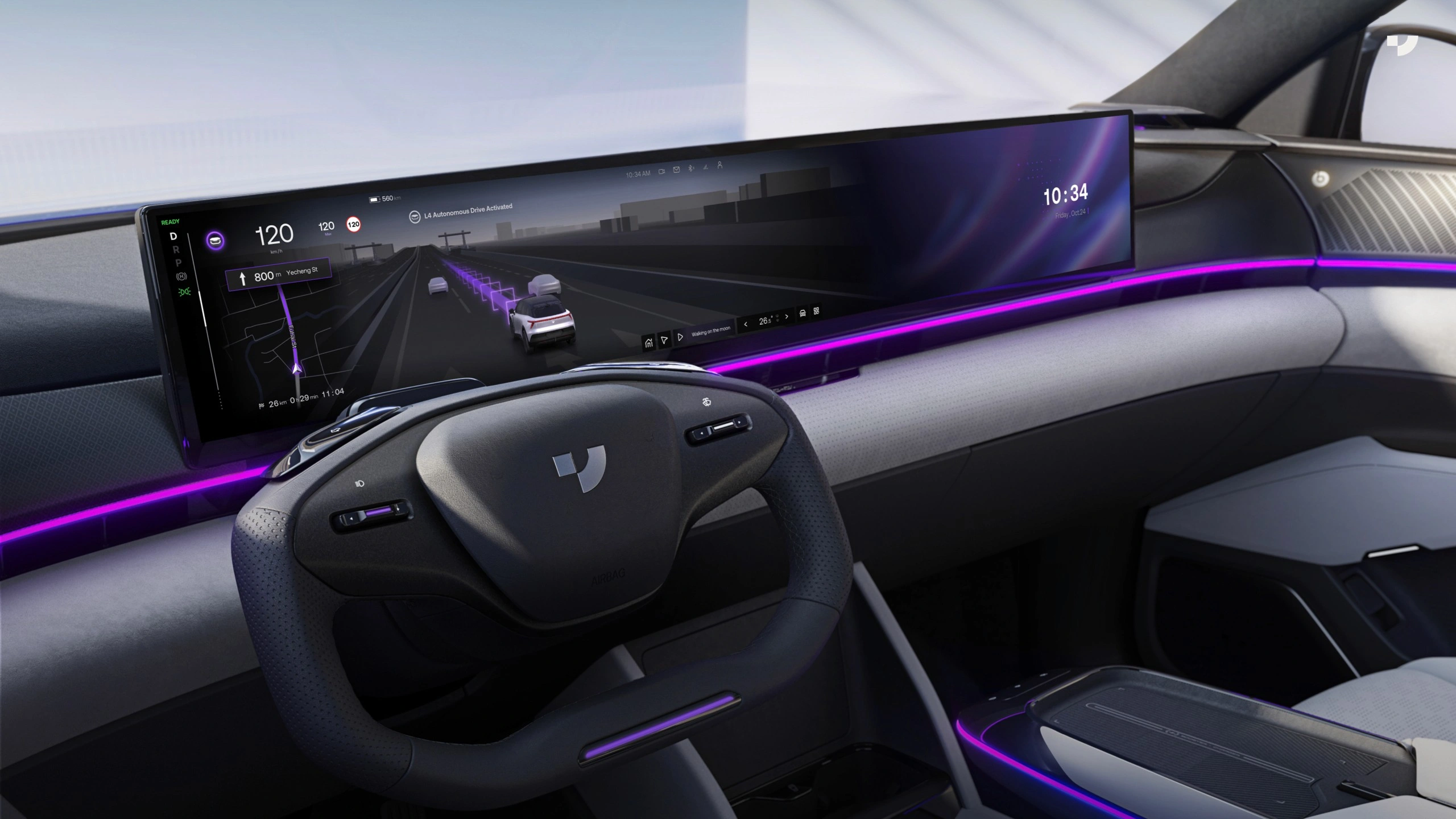
JIDU's pixel geometry and signature purple were translated into more than brand styling. Pixel defined the system's structure across icons, states, and motion, while purple became a recognizable signal for autonomy, guidance, and intelligent feedback - connecting the brand identity with the in-car experience. 极度的像素几何与标志性紫色并不只是品牌风格,而是被转译为 HMI 的体验语言。像素定义图标、状态与动态的结构,紫色则成为自动驾驶、路径引导与智能反馈中的识别信号,将品牌识别与车内体验连接起来。
Every Driving State Needs Its Own Visual Behavior 每一种驾驶状态,都需要对应的视觉行为
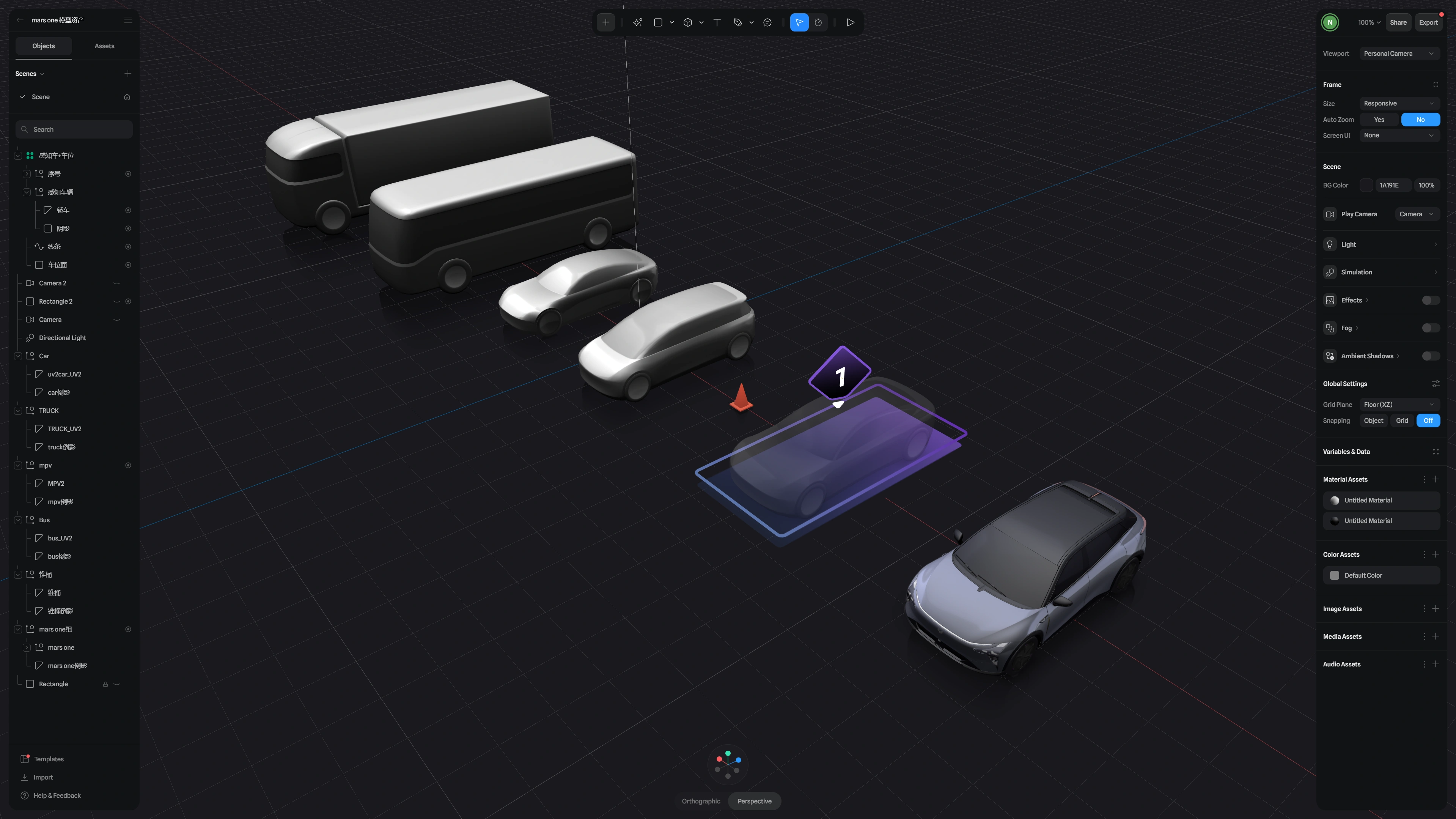
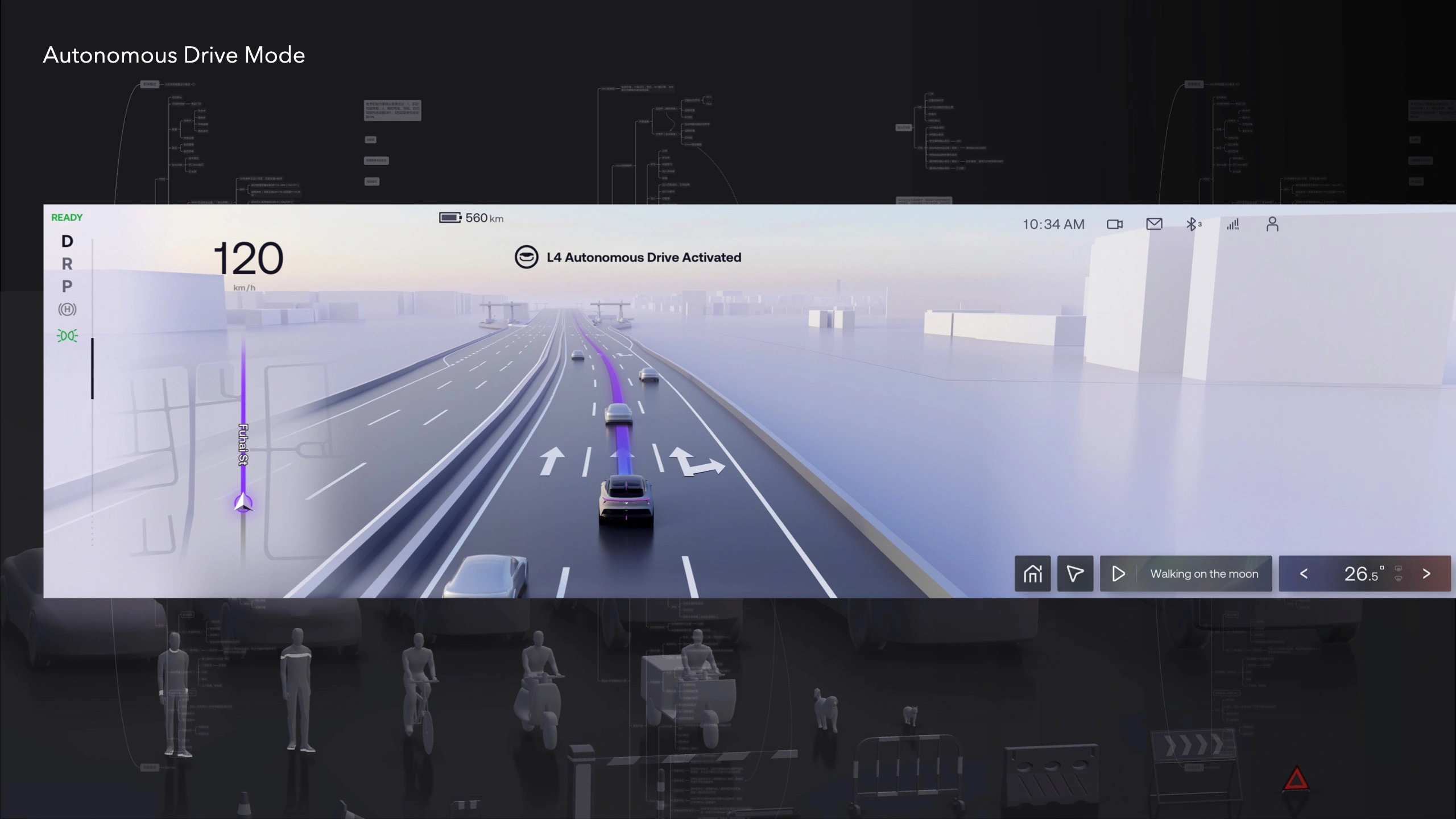
As the vehicle takes over more of the driving task, the interface becomes the representation of machine intelligence in motion. It visualizes what the car sees, how it understands the road, and what it is about to do - making autonomy feel visible, readable, and trustworthy inside the cabin. 当车辆承担更多驾驶任务,界面成为乘员读取动态智能的方式。它将车辆所见、道路理解与下一步行动转化为可感知的视觉体验,让自动驾驶在座舱中变得可见、可读且可信。
Extending the Visual Language from Screen to Space 将视觉语言从屏幕延展至空间
Elements drawn from the HMI visual language extended into scenario-based cabin experiences. Through Field, Camp, and Cinema modes, decoration visuals, ambient light, and spatial feedback worked together to reshape the cockpit atmosphere and create a more immersive in-car experience. 在驾驶状态之外,这套 HMI 视觉语言进一步延展到场景化座舱体验中。通过休憩、游戏与电影模式,专属屏幕视觉、氛围灯与空间反馈共同重塑座舱氛围,形成更沉浸的车内体验。
A Unified Visual Design System Across the Cockpit 贯穿座舱的一体化视觉设计系统
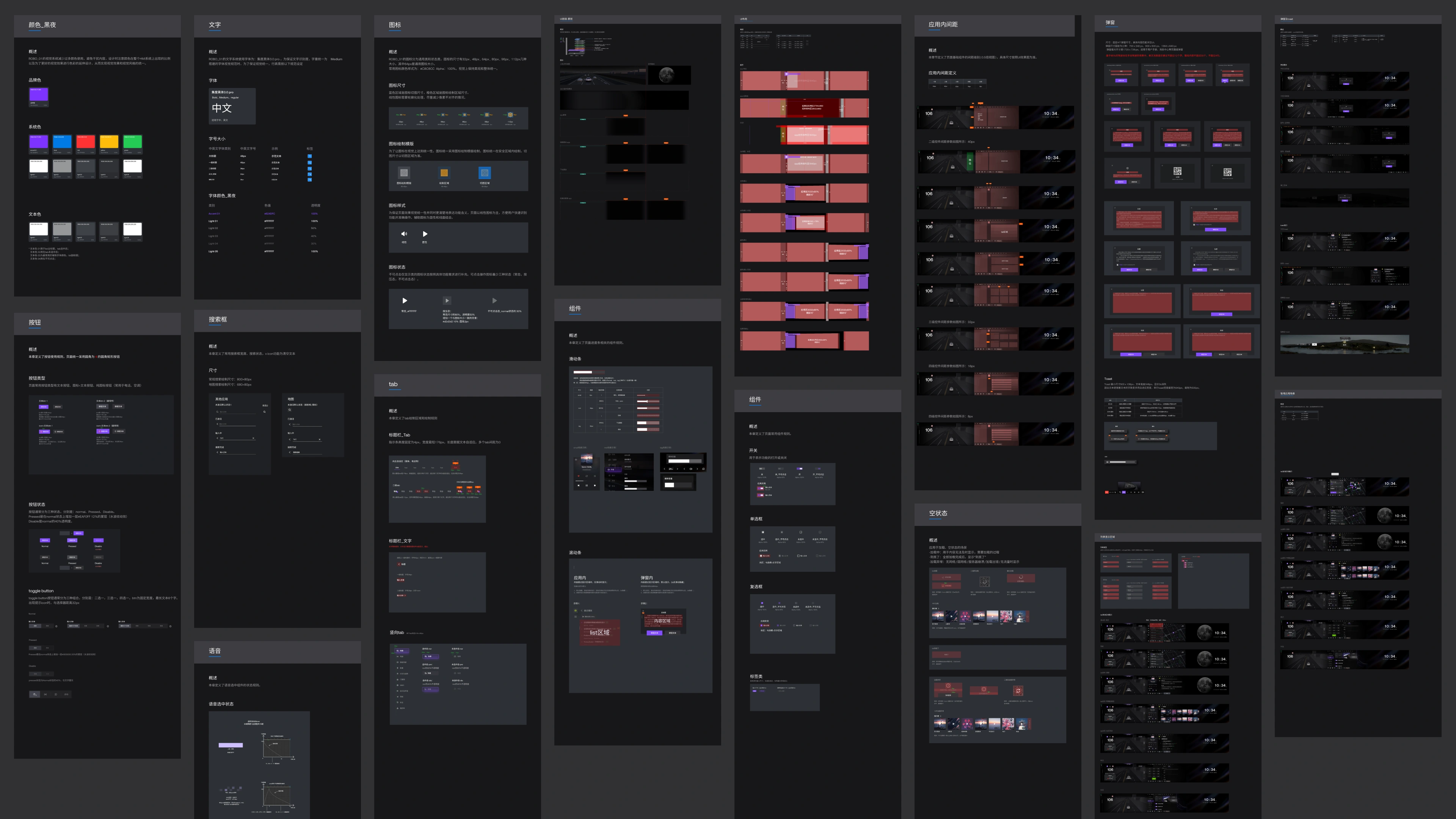
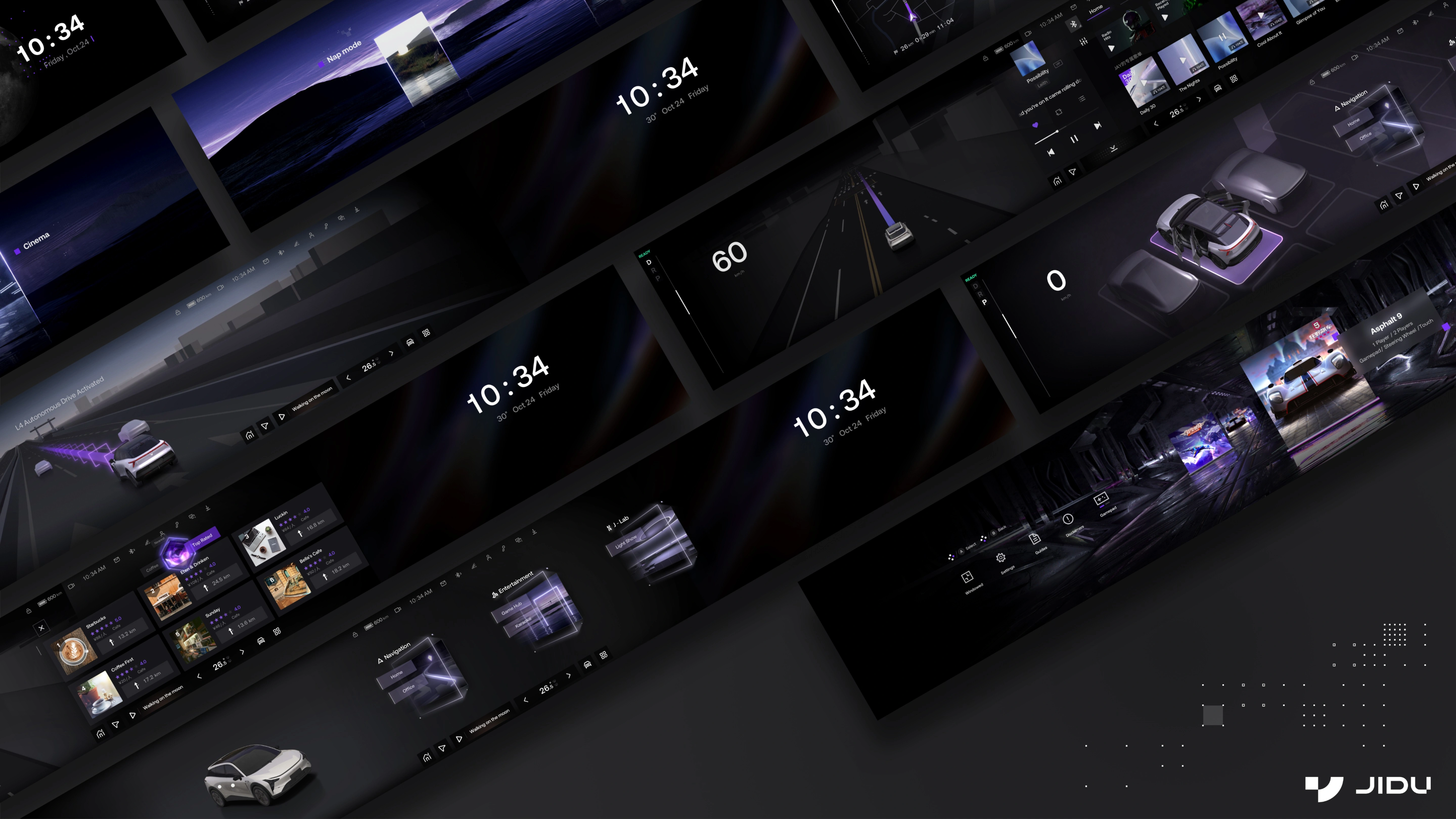
The final system brought together interface components, driving states, motion principles, iconography, and scenario-based experiences into a scalable HMI framework. It ensured that every touchpoint - from autonomous driving feedback to cabin mode - followed a consistent logic while remaining flexible for different in-car contexts. 最终系统将界面组件、驾驶状态、动效原则、图标系统与场景化体验整合为一套可延展的 HMI 框架。它确保从自动驾驶反馈到座舱场景模式的每个触点都遵循一致的逻辑,同时能够适配不同车内场景。
Behind the Scenes
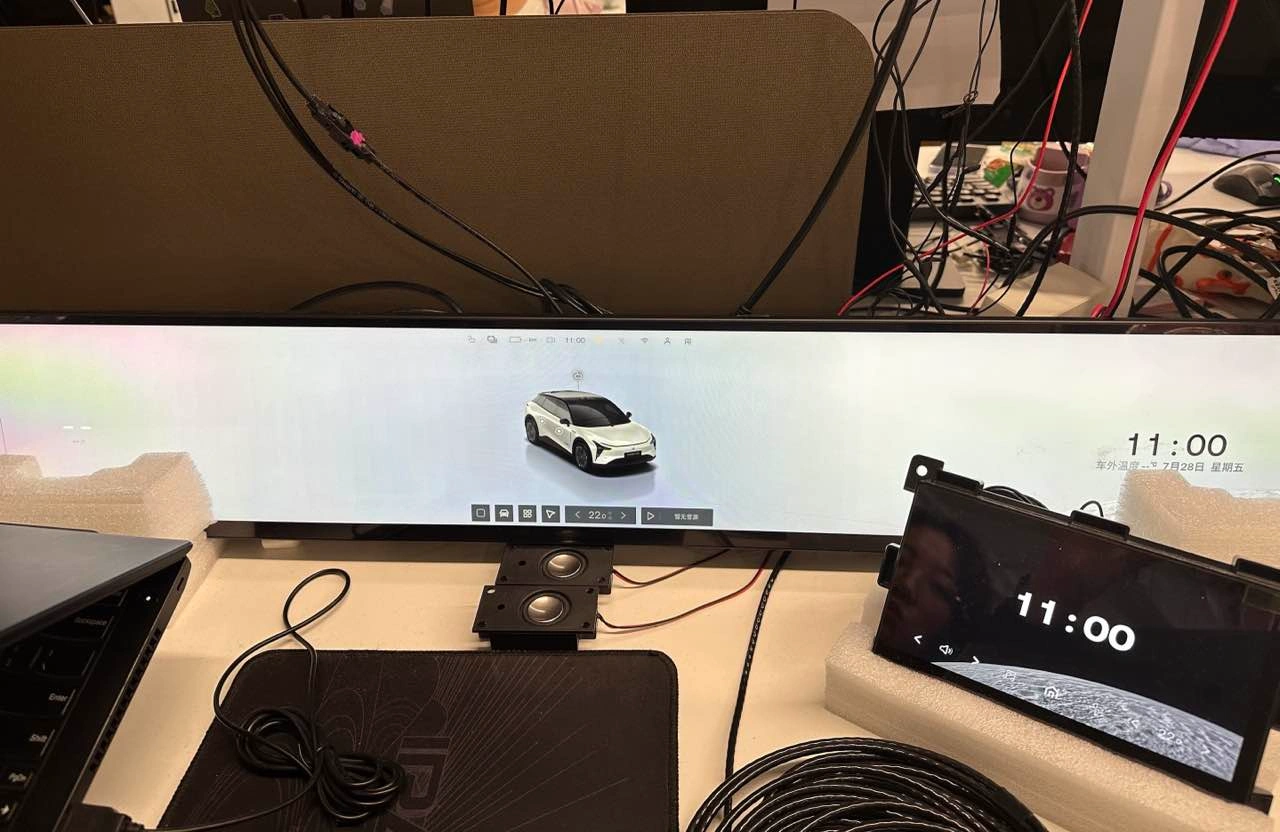
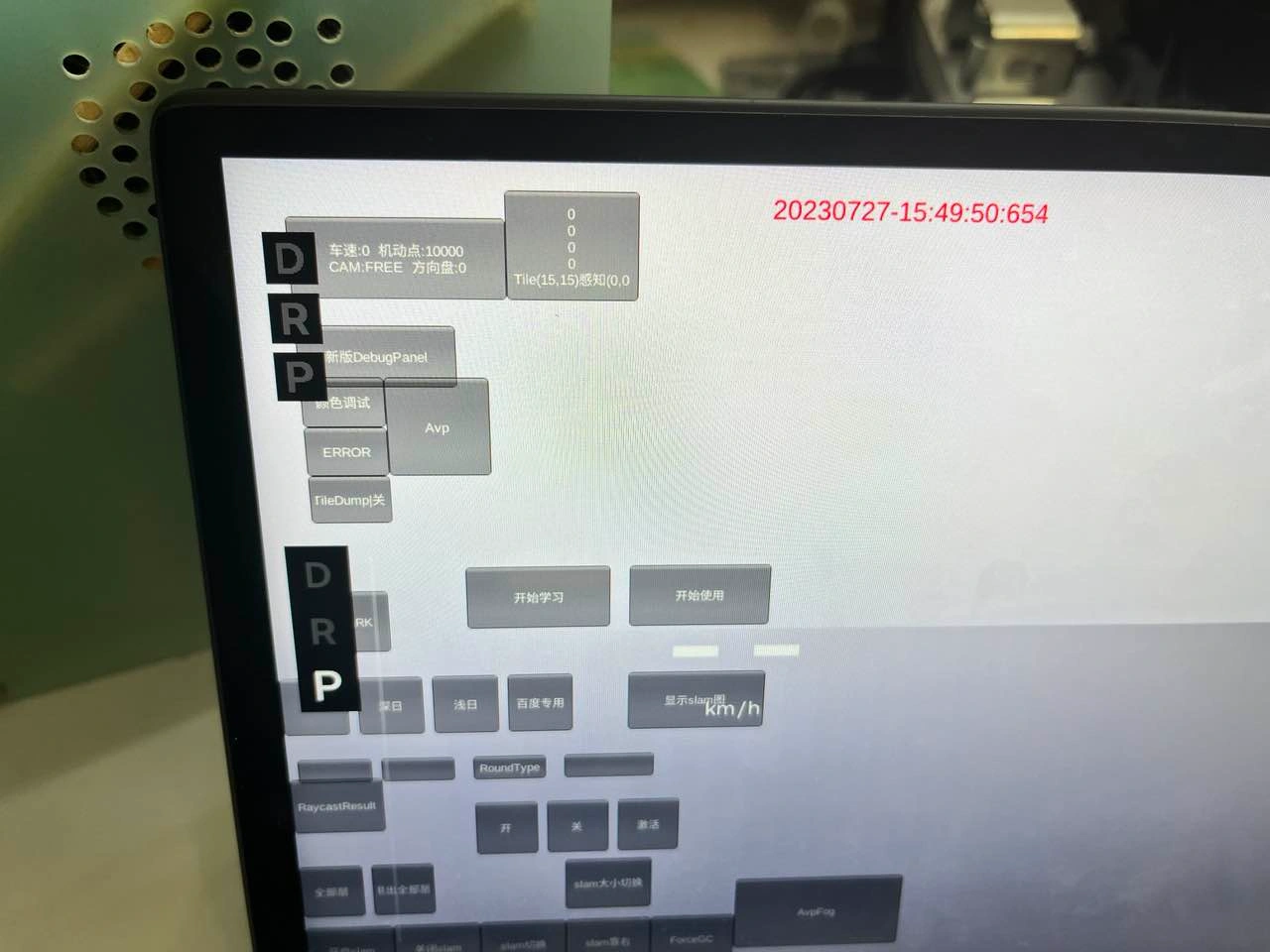
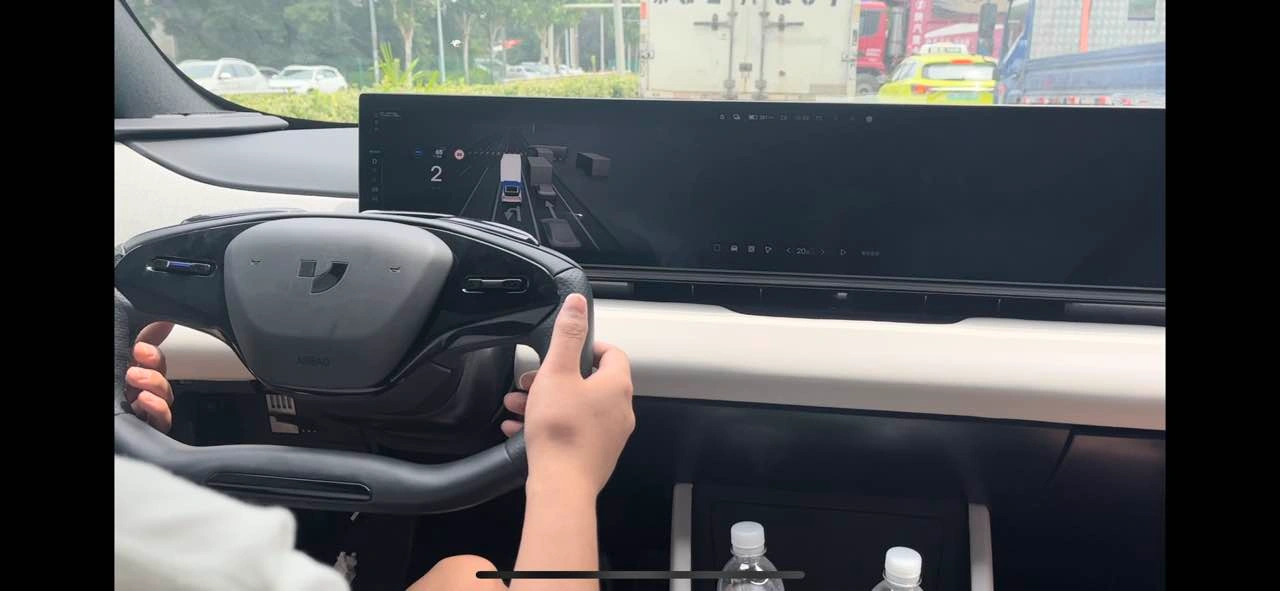
For me, this project was a practice in connecting brand language, autonomous driving experience, and the realities of the cockpit environment. 对我而言,这个项目是一次将品牌语言、自动驾驶体验与真实座舱环境连接起来的实践。
From visual exploration and motion reviews to cockpit validation, I helped shape the HMI language from concept to in-car experience. It reinforced my belief that HMI design is not just about interface expression, but about making complex intelligence feel clear, trustworthy, and emotionally connected. 从视觉探索、动效评审到座舱验证,我设计并推动这套 HMI 语言从概念走向车内体验。这个过程也让我更清楚地理解:HMI 设计不只是界面表达,而是让复杂智能以清晰、可信、有情绪连接的方式被人感知。